
iPhone Upgrade Problems? Reinstall

In years gone by, whenever an application had a problem, you could always count on certain steps from tech support (the three Rs)
1. Reindex (if a database application)
2. Reboot
3. Reinstall

But I've been spoiled in recent years by the iPhone where this seemed to be a thing of the past. This might be because most of the data is on the cloud and so it was only ever syncing. The phone was just a "vehicle" while all the data was online. Sadly, when I upgraded to the new iPhone XS this fall, I found a few apps that didn't work right. 

Since a number of application developers haven't kept up with the latest iOS phones, I attributed much of it to apps not being up to snuff but some were newer apps and they didn't work at all. Security applications wouldn't register a login, apps would just quit for no reason but worse, my favourite Health tracking app, Pillow, seemed to have lost all of my older data. 

It was still in Apple Health but Pillow, which tracks a lot of other useful information about sleep, had seemingly lost everything else. 
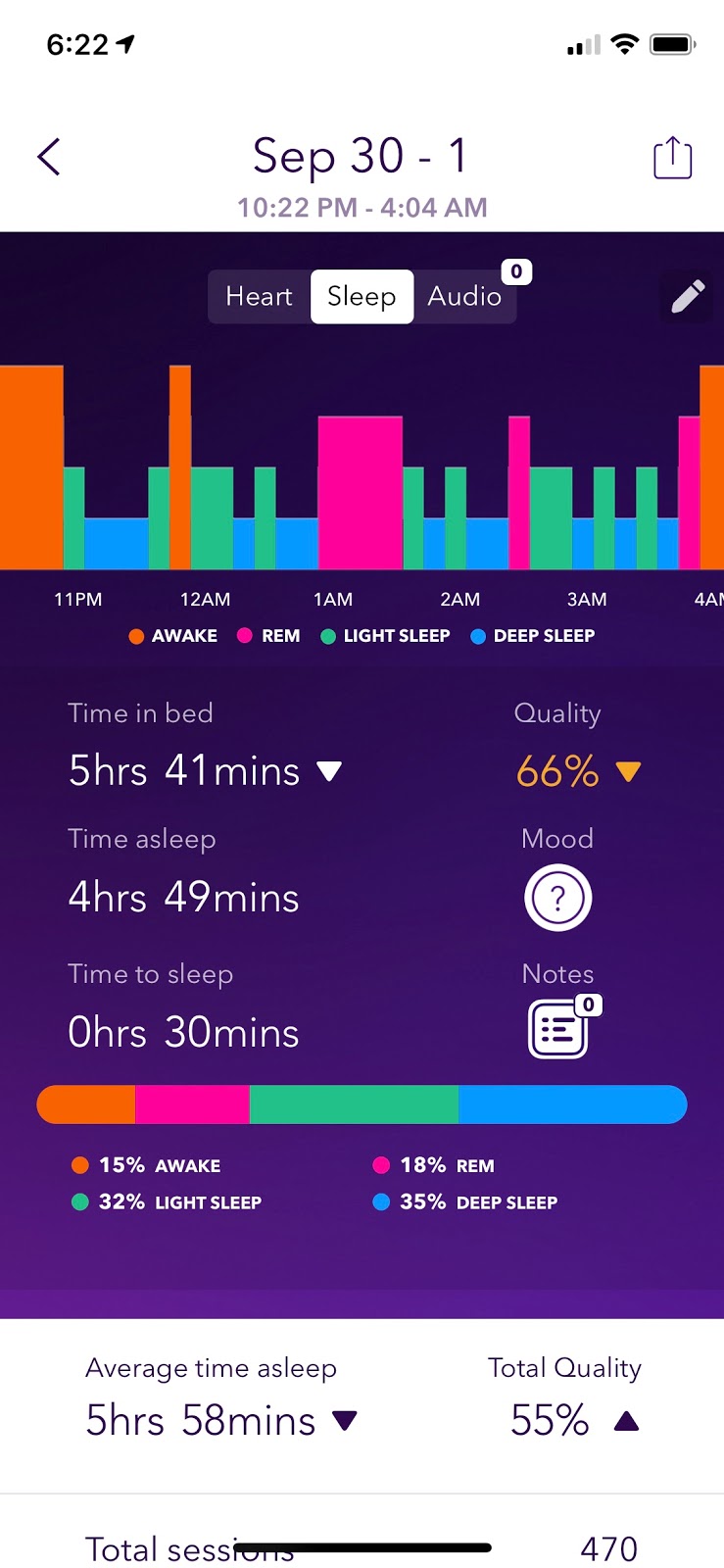
(Pillow is an awesome app either with or without the Apple Watch)


After contacting tech support, I had the answer.

Delete and reinstall.

To be sure, don't delete the app and let it remove your data but remove the App and just reinstall it from the App Store. 

The problem is related to sync - "There are some occasions where the iCloud container does not get initialized properly and re-installing the app usually solves the problem. "

So while we may no longer need the first R, it looks like the last two are still needed.

Comments

Popular posts from this blog

Elevating Project Specifications with Three Insightful ChatGPT Prompts

For developers and testers, ChatGPT, the freely accessible tool from OpenAI, is game-changing. If you want to learn a new programming language, ask for samples or have it convert your existing code. This can be done in Visual Studio Code (using GitHub CoPilot) or directly in the ChatGPT app or web site.  If you’re a tester, ChatGPT can write a test spec or actual test code (if you use Jest or Cypress) based on existing code, copied and pasted into the input area. But ChatGPT can be of huge value for analysts (whether system or business) who need to validate their needs. There’s often a disconnect between developers and analysts. Analysts complain that developers don’t build what they asked for or ask too many questions. Developers complain that analysts haven’t thought of obvious things. In these situations, ChatGPT can be a great intermediary. At its worst, it forces you to think about and then discount obvious issues. At best, it clarifies the needs into documented requirements. ...

Respect

Respect is something humans give to each other through personal connection. It’s the bond that forms when we recognize something—or someone—as significant, relatable, or worthy of care. This connection doesn’t have to be limited to people. There was an  article  recently that described the differing attitudes towards AI tools such as ChatGPT and Google Gemini (formerly Bard). Some people treat them like a standard search while others form a sort of personal relationship — being courteous, saying “please” and “thank you”. Occasionally, people share extra details unrelated to their question, like, ‘I’m going to a wedding. What flower goes well with a tuxedo?’ Does an AI “care” how you respond to it? Of course not — it reflects the patterns it’s trained on. Yet our interaction shapes how these tools evolve, and that influence is something we should take seriously. Most of us have all expressed frustration when an AI “hallucinates”. Real or not, the larger issue is that we have hi...

When A Machine Starts To Care

“Any sufficiently advanced technology is indistinguishable from magic.” Arthur C. Clarke (1962)  I first used that quote when I was starting out in the tech industry. Back then, it was a way to illustrate just how fast and powerful computers had become. Querying large datasets in seconds felt magical—at least to those who didn’t build them.  Today, we’re facing something even more extraordinary. Large Language Models (LLMs) can now carry on conversations that approach human-level fluency. Clarke’s quote applies again. And just as importantly, many researchers argue that LLMs meet—or at least brush up against—the criteria of the Turing Test.  We tend to criticize LLMs for their “hallucinations,” their sometimes-confident inaccuracies. But let’s be honest: we also complain when our friends misremember facts or recount things inaccurately. This doesn’t excuse LLMs—it simply highlights that the behavior isn’t entirely alien. In some ways, it mirrors our own cognitive limits....